Saturday, October 29, 2011

2011 ITINERARY: FROM BUDAPEST TO PRAGUE


BUDAPEST, HUNGARY October 12-15
Budapest
Sukkot in Budapest
House of Terror
Semmelweis - A Doctor Before His Time

BRATISLAVA, SLOVAKIA October 16

VIENNA, AUSTRIA October 17
Vienna - Jewish Museum
Vienna - Schonbrunn Palace

DURNSTEIN, AUSTRIA October 18
CRUISING THE WACHAU VALLEY
MONASTERY AT MELK, AUSTRIA

SALZBURG, AUSTRIA October 19
Birthplace of Mozart

REGENSBURG, GERMANY October 20
Crossroads of Early Trade Routes

NUREMBURG, GERMANY October 21
The Nazi Center

PRAGUE, CZECH REPUBLIC October 22-25
The Jewish Museum

To follow our itinerary, scroll down and click older posts until you reach the first entry, BUDAPEST. Now you will be ready to take the tour.

Friday, October 28, 2011

PRAGUE - THE JEWISH MUSEUM


The Jewish Museum of Prague was begun in the early 20th century to display the treasures of a growing and proud Czech Jewish community - whose members had flourished in arts, sciences, politics, and business. As part of the Enlightenment, Habsburg Emperor Josef II (son of Marie Theresa) in the late 18th century had granted them freedoms which they enjoyed for over one hundred years.

After Neville Chamberlain surrendered the Sudetenland to Hitler to gain "peace for our time," the Nazis invaded Czechoslovakia. Normal life for the Czechs came to an abrupt end. Jewish families were targeted for extermination by Hitler as he carried out his "war against the Jews" (Lucy Davidowicz). Ironically, Hitler continued the collection of Jewish treasures from Czechoslovakia for display in what he intended would be a museum of the artifacts of a dead and lost community.

Fortunately, Walter Lewit's parents, Julius and Camilla Abeles Lewit, left Prague and Bohemia in the 1880's to seek a better life in America. On the walls of the Pinchas Synagogue, which dates back to 1535, are inscribed 80,000 names of Bohemian and Moravian Jews killed during the Holocaust leaving nothing behind but their names.

Adolf Lewit, 7/12/1870 - 9/3/1942
Olga Lewit 5/27/1875 - 12/15/1945
Ota Lewit 11/27/1877 - unknown
Berta Lewit 3/8/1881 - 9/1/1942
Pavel Lewit 1/19/1886 - 1/9/1942
Viktor Lewit 7/16/1895 - unknown
Klara Lewit 10/24/1895 - unknown
Hana Lewit 9/6/1920 - unknown

Jiri Lewit 4/17/1925 - 6/13/1942
Ivona Lewit 1/22/1911 - 4/25/1944
Marie Lewit 12/30/1868 - 10/15/1942

May their memory be a blessing.


PHOTOS
1. Spanish Synagogue, 1868
2. Old/New Synagogue, built in the 13th century. Revived and in use today.
3. Jewish Cemetery, c. 1430 - 1787. 12,000 tombstones.

NUREMBURG – THE NAZI CENTER


Nuremburg captures many of the important themes of the Nazi era.

Nuremburg was the center for Nazi party rallies from 1933-38, where Adolf Hitler, the charismatic leader, gained the blind acceptance of the German people. To enhance Hitler’s power, Albert Speer designed cold, grey, stone stadiums, on a mammoth scale - unadorned except for a giant swastika. Roman columns and an immense parade ground completed the setting for the Fuehrer as he stood on a marble platform behind an iron rail and spoke for up to two hours to adoring crowds of up to 800,000 persons.

Justice, to the extent possible, was done in the post-war period. The Nuremburg Trials served not only as a tool of justice, but also as a way of recording the terrible events leading up to and during World War II. Trials provided the world with a clear picture of the recent totalitarian terror and aggression with its associated atrocities -- crimes against humanity, and especially the annihilation of European Jewry.

The Documentation Centers in Nuremburg focus on preserving the historic details of these times of unabated evil. The Germans specifically avoided the word museum, which is normally used to commemorate and honor the past.

On the periphery of the central town square which had been leveled by the Royal Air Force (RAF) bombing raids, a medieval church remains standing. At the base of its modern altar is a bright gold leaf ark with a symbol of the Torah scroll that would be held within. As a unifying symbol, this is intended to remind the viewer of the Jews and the Jewish roots of Christianity.

Our outspoken young guide, with a masters degree in history, was grateful to the Allies for defeating Germany and crushing the Nazis so he, unlike his grandparents, could now live in a free society. He asserted that while anti-Semitism is now illegal in Germany, the hatred still comes out in the form of anti-Zionism, i.e. anti-Israel rhetoric. However, it is not to be forgotten that since World War II, Germany has been one of the significant supporters of the state of Israel.

REGENSBURG – CROSSROADS OF EARLY TRADE ROUTES


Regensburg, a riverside medieval town, is at the crossroads of the significant trade routes between the Baltic and the Mediterranean and between France and Eastern Europe. Today, there is a different kind of trade – seen as we shared a lock with a barge transporting cars up the river. Regensburg’s multiple arched, Romanesque bridge, connecting north and south, is still in use for pedestrians. Before the modern age of refrigeration, salt was a crucial commodity for preserving food. Regensburg, like Salzburg, was a center for the salt trade. Local burghers made their fortunes in the salt trade. Wanting to show off their wealth, they built homes imitating the Italian architecture of this period -- large palazzos (palaces) with tall rectangular towers. Of course, the higher the tower, the wealthier its owner.

A medieval Gothic cathedral dominates the skyline – with an intricately carved portico. Also, the remains of a pre-14th century Jewish ghetto are commemorated with an unusual monument that traces the foundation of the original synagogue, including the bimah where the Torah was read.

SALZBURG – BIRTHPLACE OF WOLFGANG AMADEUS MOZART


Wolfgang Amadeus Mozart was born in a fourth floor apartment in the old city of Salzburg - now a museum. His father, Leopold Mozart, was a music teacher who authored a guide on how to play the violin. In its day, it was translated into several languages including Russian. Wolfgang Amadeus, his only surviving son, was a musical prodigy. From the age five, he traveled with his father to perform at the royal courts of Europe. Maria Theresa, head of the Austro-Hungarian Empire gave W.A. Mozart a diamond ring which he always treasured. Sadly, Mozart lived only from 1756-1791 and left no line of survivors. Today, in Budapest, Vienna, Salzburg and Prague, concerts are given almost daily recalling his musical genius.

PHOTOS
1. Mozart's concert violin
2. Chocolate shop window in Salzburg

THE MONASTERY AT MELK


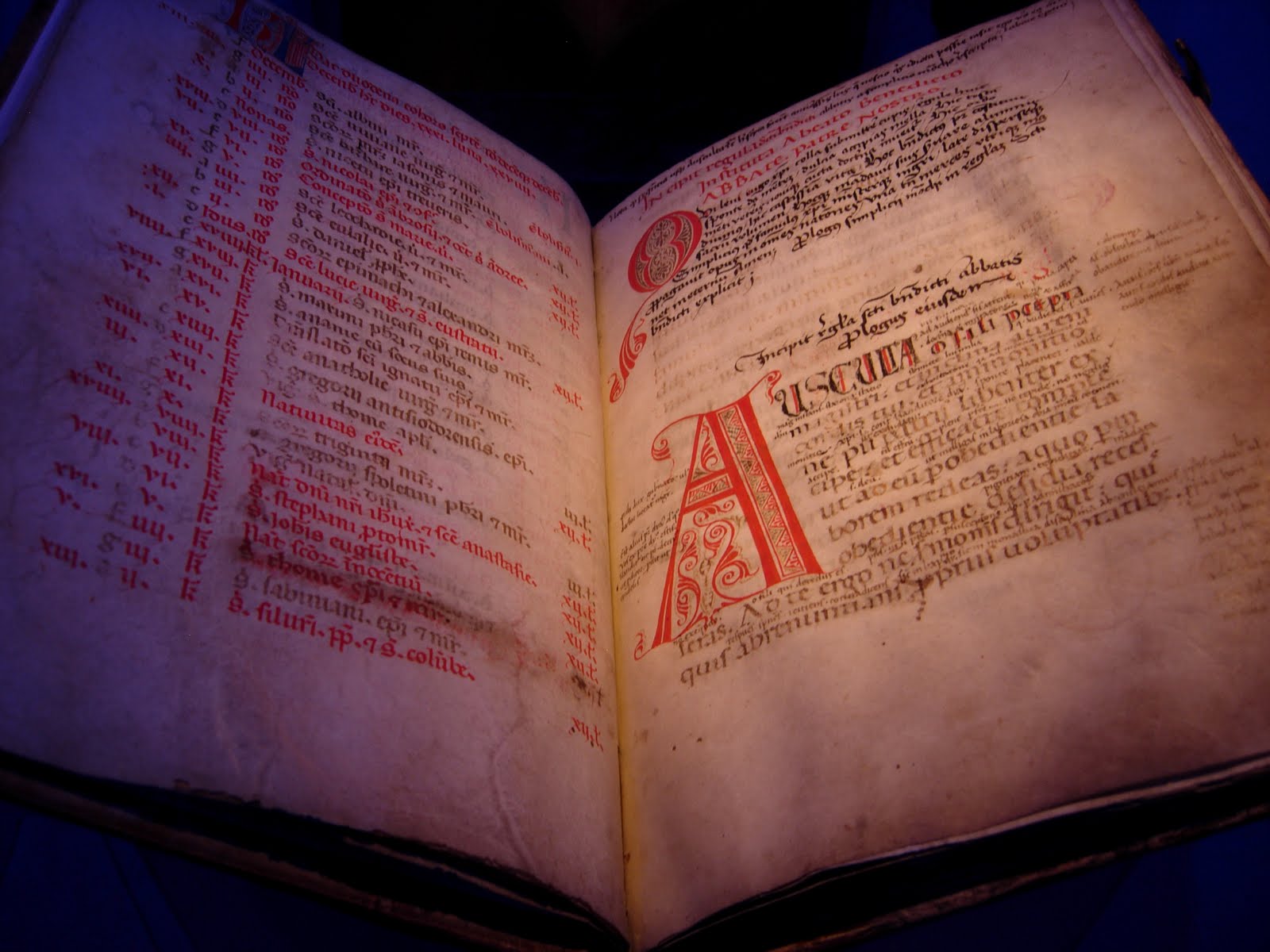
The highlight of the Benedictine monastery, founded 1089 at Melk, was its library preserving tens of thousands of early manuscripts and books, dating back to the 9th century English monk, the Venerable Bede. Included in the collection were two large globes depicting the terrestrial and celestial worlds. Now that there are few monks at Melk, its extensive and dramatic Baroque structure serves as a coed Catholic high school for over 900 students from the region.

PHOTOS
1. Rules of St. Benedict, guide for monastic living since the 7th century
2. Library - main room
3. Baroque ceiling - trompe d'oeil, actually flat
4. Monastery entrance
5. Celestial globe - 15th century

Thursday, October 27, 2011

CRUISING - THE WACHAU VALLEY


Riverside scenes from our day cruising on the Danube along the Wachau Valley --